

 English
 中文简体
中文简体 русский
 Español
 Author: Admin Date: 2026-10-09
How to Prevent Water Buildup and Improve Everyday Kitchen Dish Rack Use
A well-designed Kitchen Dish Rack should do more than hold plates and cups. It needs to drain water efficiently, keep tableware organized, and fit naturally into the available kitchen space. For households, retailers, and kitchenware distributors, common complaints often involve standing water, crowded slots, rust stains, and racks that are difficult to clean. As a manufacturer, we focus on these practical details when developing dish-drying solutions for different kitchen layouts and everyday washing habits.
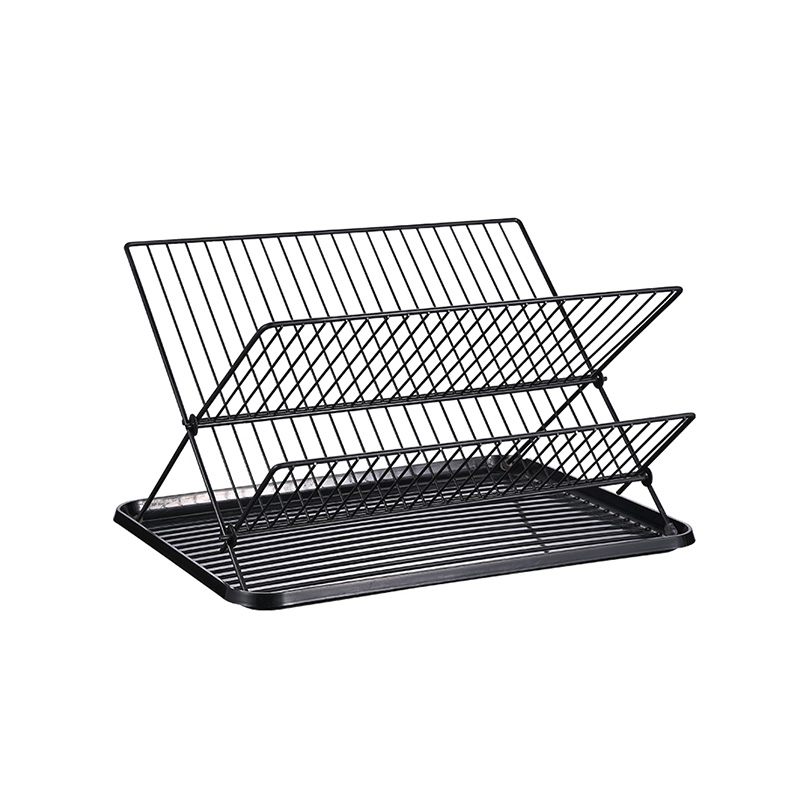
Drainage Design Makes a Practical Difference
Water collecting beneath clean dishes can leave marks on countertops and create extra cleaning work. A dish rack with a suitable drainage tray helps manage runoff and keeps the surrounding worktop drier. Buyers should consider whether the tray can be removed easily and whether its shape allows water to flow toward the drainage point. For kitchens with limited counter space, a compact design with controlled drainage can make daily washing less inconvenient.
Plate Slots Need to Match Real Kitchen Habits
Plates, bowls, lids, and chopping boards do not share the same shape or thickness. When slots are too narrow or poorly spaced, users may struggle to position items securely or remove them without moving nearby dishes. Our manufacturing approach considers the practical arrangement of different tableware types. Retailers selecting a Kitchen Dish Rack for their product range should look for stable plate dividers, usable spacing, and a layout that accommodates common household dishes.
Material Selection Affects Long-Term Maintenance
Moisture exposure is part of everyday dish drying, so material choice deserves careful attention. Stainless steel, coated metal, and plastic each offer different benefits in appearance, weight, maintenance, and cost. However, performance also depends on construction quality and how the product is used.
When evaluating samples, buyers should check:
- Whether metal joints and edges are finished cleanly.
- Whether coatings appear even and free from visible defects.
- Whether plastic components feel stable during normal loading.
- Whether the drainage tray and rack can be cleaned without difficulty.
These checks help buyers assess product suitability before placing larger orders.
Countertop Space Should Guide Product Dimensions
A large rack may hold more dishes but leave little room for food preparation. A compact model saves space but may become crowded after family meals. Product dimensions should therefore reflect the intended customer and kitchen environment. Single-person households, family kitchens, and compact apartments can have different storage needs. As a manufacturer, we recommend assessing the usable countertop area, cabinet clearance, and expected dish volume together rather than judging capacity from the rack's external dimensions alone.
Easy Cleaning Helps Maintain Product Appeal
Food particles, soap residue, and mineral deposits can collect around corners, joints, and tray edges. Designs with accessible surfaces and detachable components make routine cleaning more manageable. Buyers should examine whether the rack can be wiped down easily and whether water-trapping areas are limited. These details also matter to retailers because customers often judge kitchen accessories by how conveniently they fit into everyday cleaning routines.
Product Stability Supports Safer Daily Use
A loaded rack needs to remain steady when users place or remove plates. Uneven feet, poorly balanced frames, and overcrowded slots can affect stability. During product evaluation, distributors should test the rack on a flat surface and check whether its frame shifts under normal use. Non-slip feet, balanced weight distribution, and well-fitted components can help create a more dependable user experience.
Manufacturing Consistency Matters for Bulk Orders
For importers and kitchenware retailers, product quality must remain consistent across repeat shipments. Differences in dimensions, surface finishes, assembly, or accessory fit can lead to customer complaints and additional handling costs. We pay attention to structural design, component matching, finishing, and practical usability when developing a Kitchen Dish Rack for different market requirements. By reviewing samples and confirming product specifications before production, buyers can select a dish-drying solution that suits their customers and supports more reliable long-term supply.

-
Feedback
CONTACT US
If You Need More Help, Let Us Know.
How can we help you,
contact us anytime.
- Send us a message
-
Call us
+86-15924212045
Quick Links
Products
Contact Info
-
Phone
+86-13616790777
-
Add
No. 176, Xinxin Road, Qianhang Village, Gushan Town, Yongkang City, Zhejiang Province, China
Copyright © Yongkang Haisong Household Products Co., Ltd. All Rights Reserved.

OEM Iron Wire Metal Storage Products