

 English
 中文简体
中文简体 русский
 Español
 Author: Admin Date: 2026-03-13
Kitchen Dish Rack Rust-Resistant Materials Used by Manufacturers Today
Dish racks are used daily in kitchens where water exposure is unavoidable. Because of this environment, corrosion resistance has become an important consideration during product design and manufacturing. When buyers evaluate products from Kitchen Dish Rack Manufacturers, one of the key concerns is whether the materials can maintain their condition after long periods of contact with water and humidity.
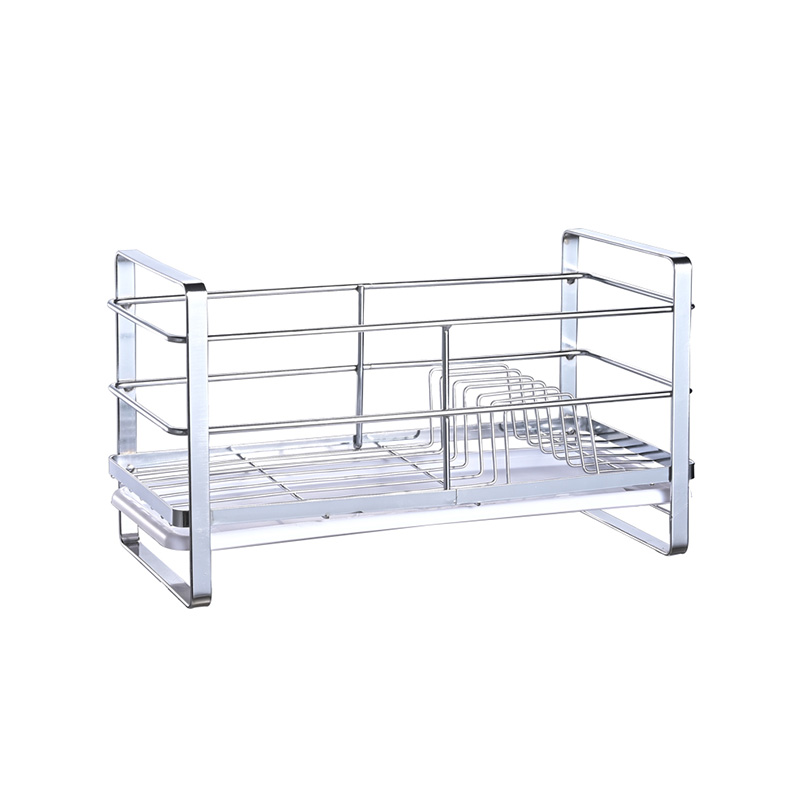
Manufacturers that produce other kitchen accessories, including companies operating as a Napkin Holder Factory, often face similar challenges. Kitchen organizers placed on countertops must remain durable even when exposed to moisture, cleaning liquids, and temperature changes. As a result, many manufacturers apply specific materials and protective treatments to reduce the risk of rust.
Stainless Steel as a Common Rust-Resistant Material
Stainless steel is frequently used in kitchen equipment because of its ability to resist corrosion. This material contains chromium, which forms a protective layer on the surface. When the surface is exposed to oxygen, this layer helps slow down oxidation.
For dish racks, stainless steel frames provide structural support while also helping the rack maintain a clean appearance. Many Kitchen Dish Rack Manufacturers design racks with stainless steel wire frames that allow water to drain easily while maintaining airflow around the dishes.
In addition to corrosion resistance, stainless steel structures also offer stable support for plates, bowls, cups, and cooking utensils. The material is commonly used in kitchens because it handles regular washing and drying cycles.
Surface Coating Technologies
Although stainless steel performs well in humid environments, some dish racks are made from other metals that require protective coatings. These coatings act as barriers between the metal surface and water.
Powder Coating
Powder coating is widely applied to metal dish racks. In this process, dry powder particles are applied to the metal surface and then heated to form a protective layer. This layer helps prevent moisture from reaching the metal underneath.
Powder-coated dish racks are often available in various colors, allowing the product to match different kitchen styles.
Chrome Plating
Chrome plating is another surface treatment used in kitchenware. A thin layer of chromium is deposited onto the metal surface, creating a reflective finish while also improving corrosion resistance.
Many dish racks produced by Kitchen Dish Rack Manufacturers include chrome-plated frames that combine durability with a clean visual appearance.
Electroplating Techniques
Electroplating can also be applied to metal dish racks to improve durability. In this process, metal ions are deposited onto the surface through an electrical current. The result is a smooth protective layer that helps reduce the impact of moisture.
Structural Design That Supports Rust Prevention
Material selection alone does not determine how well a dish rack resists rust. Structural design also plays an important role in reducing moisture accumulation.
Effective Drainage Systems
Many dish racks include sloped drainage boards or drip trays. These features guide water away from the rack and prevent it from remaining on the metal surface for extended periods.
By allowing water to flow into the sink or into a removable tray, the rack dries faster and remains cleaner.
Open Wire Structures
Open wire frames allow air to circulate around the dishes and the rack itself. Increased airflow helps surfaces dry naturally after washing.
Because of this advantage, many Kitchen Dish Rack Manufacturers design racks with spaced wire frames instead of solid panels.
Removable Components
Detachable trays and utensil holders allow users to clean different parts of the rack separately. Removing accumulated water helps reduce the possibility of corrosion over time.
Manufacturers producing kitchen accessories, such as a Napkin Holder Factor,y may also apply detachable components in countertop organizers to simplify cleaning.
Maintenance Practices That Support Durability
While rust-resistant materials improve durability, proper maintenance also contributes to the lifespan of kitchen tools.
After washing dishes, allowing the rack to dry fully helps reduce moisture buildup. Regular cleaning of drainage trays and utensil holders also prevents water from remaining inside the rack.
These simple routines support the performance of the materials used in dish racks and other countertop accessories.
Rust resistance plays an important role in the design of kitchen storage tools. Materials such as stainless steel provide structural strength and protection against corrosion, while coatings such as powder finishes and chrome layers act as a barrier against moisture.

-
Feedback
CONTACT US
If You Need More Help, Let Us Know.
How can we help you,
contact us anytime.
- Send us a message
-
Call us
+86-15924212045
Quick Links
Products
Contact Info
-
Phone
+86-13616790777
-
Add
No. 176, Xinxin Road, Qianhang Village, Gushan Town, Yongkang City, Zhejiang Province, China
Copyright © Yongkang Haisong Household Products Co., Ltd. All Rights Reserved.

OEM Iron Wire Metal Storage Products