

 English
 中文简体
 русский
 Español
Author: Admin Date: 2026-11-13
Reducing Installation Complaints Through Better Over Door Hook Design
As household storage products become more focused on convenience and space utilization, door-mounted accessories are attracting attention from homeware wholesalers, retailers, and importers. An Over Door Hook provides additional hanging space without requiring wall drilling, making it suitable for apartments, rental properties, bedrooms, and bathrooms. However, installation problems can affect customer satisfaction and product returns. From a manufacturing perspective, understanding these practical issues helps buyers select products that are easier to install, more stable in use, and suitable for different door structures.
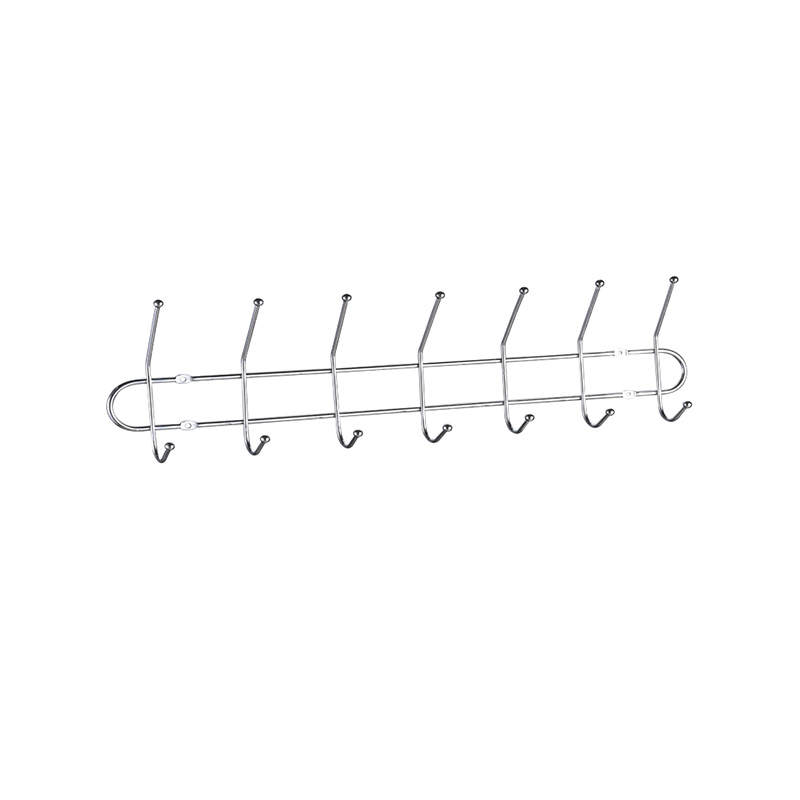
Door Clearance Is a Key Design Consideration
One issue with traditional door hooks is insufficient clearance between the door and its frame. Even when a hook fits over the door, its thickness may interfere with normal door movement.
During product development, manufacturers need to consider the relationship between the hanging bracket and door structure. A slim profile can help reduce interference, while properly designed bends allow the hook to sit securely.
For buyers sourcing door-mounted accessories, checking the bracket dimensions is just as important as reviewing the overall product size.
Hook Shape Influences Everyday Convenience
Different hook shapes serve different storage purposes. A narrow hook may be suitable for clothing straps, while a wider curved design can accommodate coats, handbags, or towels.
Manufacturers should pay attention to several structural details:
- Rounded edges to reduce fabric snagging.
- Suitable hook depth for different hanging items.
- Smooth contact surfaces for easier handling.
- Appropriate spacing between adjacent hooks.
These design choices help make the product practical without adding unnecessary complexity.
Preventing Movement During Door Operation
A loose-fitting hook can shift when users open or close the door. Repeated movement may create noise, scratches, or an unstable hanging experience.
The bracket should maintain sufficient contact with the door while allowing normal operation. Its shape, material thickness, and weight distribution all influence stability.
In manufacturing inspections, we consider fitting accuracy and structural consistency important checkpoints. A product that looks attractive but moves excessively during use may generate avoidable complaints for distributors.
Surface Finishing Affects Product Durability
Surface treatment is another consideration when purchasing metal Over Door Hook products. Poor finishing may lead to uneven appearance, rough edges, or premature surface deterioration.
Depending on the material and intended market, buyers may consider powder coating, plating, or other suitable finishing methods.
Manufacturers should pay attention to:
- Coating consistency across the product.
- Edge smoothness after processing.
- Surface defects and visible scratches.
- Protection during storage and transportation.
Consistent finishing helps maintain product appearance throughout distribution and retail handling.
Packaging Should Protect the Hook Structure
Although door hooks are relatively compact, improper packaging can still cause problems. Metal products may scratch one another during transportation, while thin brackets can become deformed under external pressure.
Individual protective packaging, suitable inner cartons, and organized bulk packing can help reduce these risks.
For importers purchasing in large quantities, packaging specifications should be discussed before production. This is particularly relevant for products with different finishes or multiple hook components.
Product Variations Help Wholesalers Reach Different Buyers
Different sales channels require different product configurations. Household retailers may prefer decorative multi-hook designs, while hardware distributors may focus on simple metal structures and practical installation.
Manufacturers can consider variations in:
- Single-hook and multi-hook arrangements.
- Metal and plastic materials.
- Different colors and surface finishes.
- Packaging formats for retail and bulk supply.
Clear product specifications help overseas buyers compare options and organize their purchasing plans.
Reliable Manufacturing Supports Long-Term Supply
For wholesalers and private-label buyers, product consistency matters throughout repeated orders. Stable dimensions, controlled finishing processes, and clear inspection standards help reduce differences between production batches.
An Over Door Hook should be evaluated as a functional storage accessory rather than simply a small household fitting. By paying attention to bracket clearance, hook geometry, surface treatment, and packaging protection, manufacturers can provide more dependable products for overseas markets and help buyers build a practical home organization collection.

-
Feedback
CONTACT US
If You Need More Help, Let Us Know.
How can we help you,
contact us anytime.
- Send us a message
-
Call us
+86-15924212045
Quick Links
Products
Contact Info
-
Phone
+86-13616790777
-
Add
No. 176, Xinxin Road, Qianhang Village, Gushan Town, Yongkang City, Zhejiang Province, China
Copyright © Yongkang Haisong Household Products Co., Ltd. All Rights Reserved.

OEM Iron Wire Metal Storage Products