

 English
 中文简体
 русский
 Español
Author: Admin Date: 2026-11-23
Improving Over Door Hook Product Selection Through Practical Quality Checks
Household storage products are increasingly expected to combine simple installation with reliable everyday performance. For importers, wholesalers, and homeware retailers, an Over Door Hook is a practical addition to storage product collections, particularly for apartments, bathrooms, bedrooms, and compact living spaces. However, differences in construction and manufacturing quality can affect how well these products perform after installation. Understanding the details behind product quality helps buyers avoid common sourcing problems and select suitable products for their target markets.
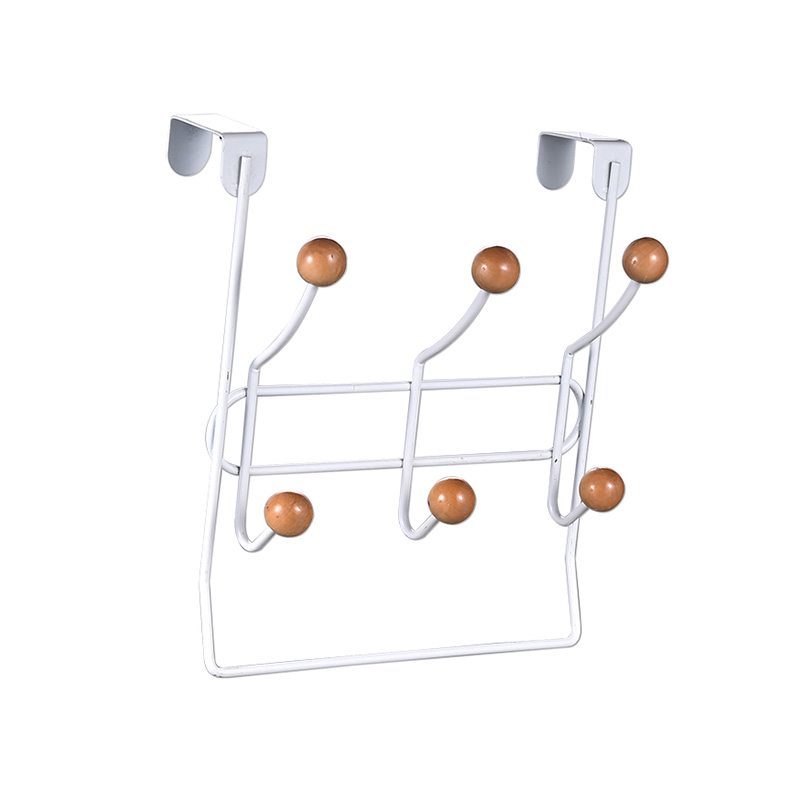
Bracket Construction Determines Fitting Performance
The bracket is the part that connects the hook to the door, so its dimensions directly affect installation.
If the bracket is too thick, it may interfere with door closure. If its shape does not match the door structure, the product may become unstable during use.
During manufacturing, we pay attention to bracket thickness, bending accuracy, edge treatment, and dimensional consistency. These details help ensure that the finished product fits its intended door specifications.
Hook Strength Needs to Match Intended Applications
Different users require different hanging capacities. Some use door hooks for lightweight towels and scarves, while others need to organize coats, backpacks, and handbags.
Manufacturers should consider the relationship between hook thickness, material properties, connection structure, and load distribution.
A useful quality evaluation should include:
- Checking whether the hook bends under its intended load.
- Inspecting connection points for structural defects.
- Evaluating stability when items are removed or replaced.
- Confirming that the product maintains its shape during normal use.
Clear load recommendations also help distributors avoid mismatching products with their intended applications.
Surface Treatment Influences Appearance and Maintenance
Surface quality is an important consideration for household accessories because products remain visible during everyday use.
Metal hooks may use different finishes depending on their material and market positioning. Coated surfaces can provide color options, while polished or plated finishes offer different visual effects.
Buyers should inspect coating uniformity, corner coverage, surface scratches, and exposed areas. For bathroom applications, material and finishing choices should also reflect the expected moisture conditions.
Edge Processing Reduces Unnecessary Complaints
Sharp edges and rough contact points can affect both installation and daily handling. They may also catch clothing, damage door surfaces, or create an unpleasant user experience.
For this reason, edge treatment should be included in the production inspection process.
Manufacturers should check the following areas:
- The edges of the hanging bracket.
- The ends of individual hooks.
- Bending areas where processing marks may appear.
- Contact surfaces that touch the door.
Consistent edge finishing contributes to a more comfortable and dependable product.
Multi-Hook Structures Require Careful Spacing
Multi-hook designs offer additional storage capacity, but poorly arranged hooks can make products difficult to use.
When several coats or bags are placed close together, insufficient spacing may cause overlapping and make individual items harder to remove.
Manufacturers should consider hook direction, vertical distance, projection length, and overall product width. These dimensions should reflect the intended storage applications rather than simply increasing the number of hooks.
Packaging Protects Product Quality During Distribution
Even a well-manufactured product can arrive with scratches or deformation if packaging is unsuitable.
For bulk orders, individual protection, internal separation, and appropriate carton arrangements help reduce friction between products during transportation.
Importers should confirm packaging requirements before production, particularly when ordering different colors, finishes, or multi-component designs.
Manufacturing Consistency Supports Repeat Orders
For overseas buyers, sourcing a product is only part of the purchasing process. Maintaining consistent specifications across repeat orders is equally important.
As manufacturers, we focus on material checks, forming accuracy, surface inspection, and finished-product evaluation to maintain production consistency.
A well-designed Over Door Hook should provide convenient installation, suitable hanging support, and dependable surface finishing. By evaluating these practical details before placing bulk orders, wholesalers and retailers can make more informed sourcing decisions and build a household storage range that meets everyday market requirements.

-
Feedback
CONTACT US
If You Need More Help, Let Us Know.
How can we help you,
contact us anytime.
- Send us a message
-
Call us
+86-15924212045
Quick Links
Products
Contact Info
-
Phone
+86-13616790777
-
Add
No. 176, Xinxin Road, Qianhang Village, Gushan Town, Yongkang City, Zhejiang Province, China
Copyright © Yongkang Haisong Household Products Co., Ltd. All Rights Reserved.

OEM Iron Wire Metal Storage Products