

 English
 中文简体
中文简体 русский
 Español
 Author: Admin Date: 2026-01-09
Over Door Hook Factory Insights on Materials, Design, and Load Capacity
Over Door Hook Factory operations continue to evolve as global demand grows for practical door-mounted storage solutions across residential and commercial environments. Buyers and distributors increasingly focus on how materials, structural design, and load-bearing considerations influence long-term usability. These factors play a critical role in determining product stability, safety, and adaptability across various interior spaces.
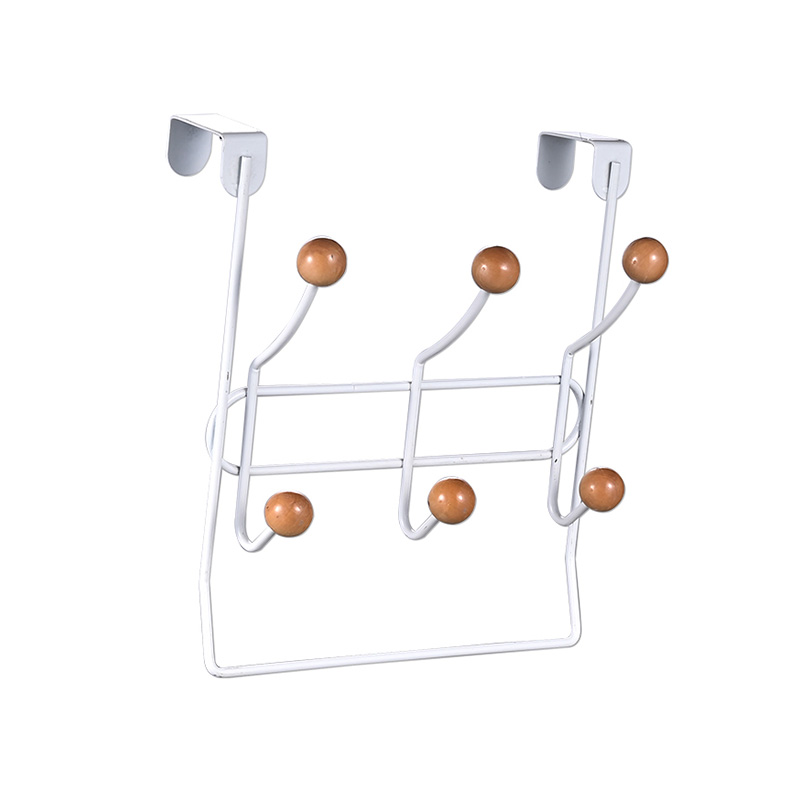
Material Selection for Daily Use Environments
Material choice is a fundamental consideration in door hook production. Commonly used options include coated steel and stainless steel, each offering different advantages depending on the application environment. In moisture-prone areas such as bathrooms, surface protection plays a vital role in maintaining structural integrity over time. Treatments such as powder coating or polished finishes help reduce surface wear caused by humidity and regular handling.
From a production perspective, material consistency allows manufacturers to maintain uniform shape, thickness, and strength across product batches. Similar material standards are often shared with related product lines developed within a Shower Caddy Factory, especially when both product categories are intended for bathroom storage systems.
Structural Design and Stability Considerations
Design structure directly influences how door hooks distribute weight. A well-balanced frame reduces stress on the door edge while keeping stored items accessible. Attention is often given to hook curvature, spacing, and reinforcement points to support daily usage without compromising door alignment.
In many cases, design approaches align with principles used in shower storage systems. Storage baskets and hanging racks produced by a Shower Caddy Factory frequently rely on similar weight distribution logic, ensuring stability without requiring permanent installation.
Load Capacity and Testing Processes
Load capacity is evaluated through internal testing methods designed to reflect real-life usage scenarios. These assessments examine how hooks respond to repeated placement and removal of household items such as towels, clothing, and accessories. Rather than focusing on numerical thresholds, the emphasis remains on maintaining consistent performance under normal conditions.
Manufacturing teams often refine design elements based on these observations, adjusting thickness, reinforcement, or hook spacing accordingly. This iterative process helps align functional expectations across different storage products.
The same rigorous philosophy applies to a Shower Caddy Factory. Products must be assessed for their capacity to hold multiple bottles and toiletry items without sagging or detaching. Testing simulates long-term use with sustained weight, as well as the dynamic forces of items being added or removed. For tension-mounted caddies, the stability of the expansion mechanism is scrutinized. This shared commitment to empirical validation moves strength claims from marketing language into demonstrable product integrity. It represents a technical commitment common to manufacturers focused on delivering reliable goods.
Applications Across Multiple Living Spaces
Door hook systems are no longer limited to a single room. Applications now extend beyond bathrooms into bedrooms, kitchens, laundry rooms, and entryways. Compatibility with multiple spaces increases product versatility and broadens distribution opportunities.
By aligning material and design principles with those used by a Shower Caddy Factory, manufacturers can offer coordinated storage solutions that serve varied household needs while maintaining visual consistency.
Material selection, thoughtful design, and balanced load support remain essential aspects of door hook manufacturing. Through careful planning and testing, door-mounted storage products continue to meet evolving organizational needs across modern living environments.

-
Feedback
CONTACT US
If You Need More Help, Let Us Know.
How can we help you,
contact us anytime.
- Send us a message
-
Call us
+86-15924212045
Quick Links
Products
Contact Info
-
Phone
+86-13616790777
-
Add
No. 176, Xinxin Road, Qianhang Village, Gushan Town, Yongkang City, Zhejiang Province, China
Copyright © Yongkang Haisong Household Products Co., Ltd. All Rights Reserved.

OEM Iron Wire Metal Storage Products