

 English
 中文简体
中文简体 русский
 Español
 Author: Admin Date: 2026-08-14
Smarter Dish Drying for Compact Kitchens and Busy Sink Areas
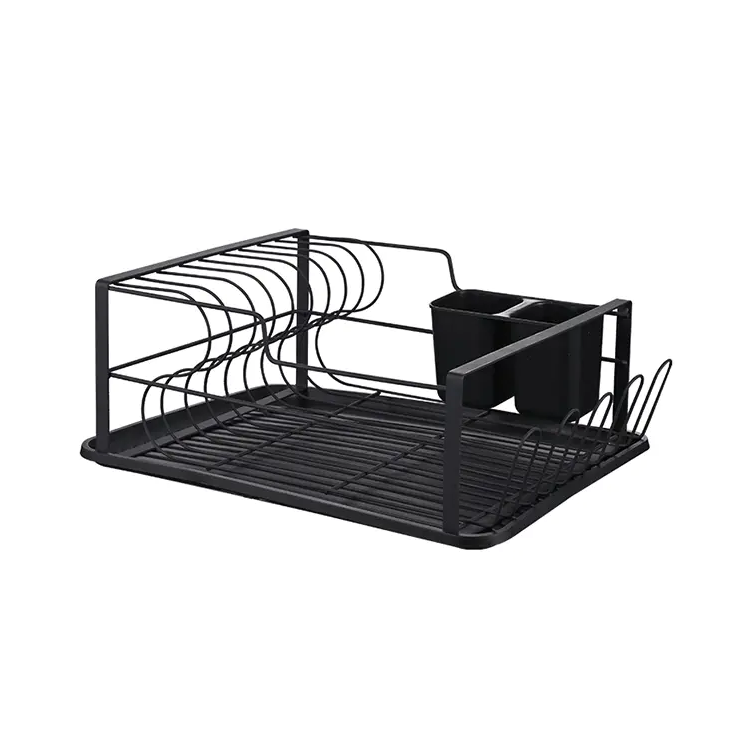
A Kitchen Dish Rack is a small kitchen accessory, but its design can have a noticeable effect on the daily washing routine. In compact kitchens, the common problems are familiar: wet countertops, stacked plates that do not dry properly, cups taking up too much room, and utensils scattered around the sink. A well-designed Kitchen Dish Rack can bring these tasks into one organized drying area while keeping water under control. Current kitchen organization trends are also putting more attention on practical storage that keeps frequently used items accessible without making the countertop feel crowded.
Keep Water Away From the Countertop
Water management is one of the first details to consider when choosing a dish drying rack. After hand washing, water naturally collects beneath plates, bowls, and cups. Without a suitable drainage structure, the countertop can remain wet for long periods.
A useful rack should guide water toward a drainboard, drainage channel, or sink rather than allowing it to spread across the work surface. Angled drainage designs and raised rack feet can also create space underneath the dishes, allowing water to move away more easily.
Make Vertical Space Work Harder
Counter space is often limited, especially in apartments and smaller kitchens. Instead of expanding across the countertop, a compact dish drying rack can use vertical levels to separate plates, bowls, cups, and utensils.
This arrangement also makes individual items easier to remove. Plates can stand upright rather than being placed in a flat pile, while cups can be positioned where air can circulate around them. For households that wash dishes several times a day, this simple separation can make the sink area feel much less congested.
Give Every Item a Drying Position
A common source of mess is placing everything wherever there is an empty spot. Plates lean against bowls, cutlery collects in one corner, and glasses compete for the same space.
A more practical structure divides the rack into dedicated areas:
- Plate slots for stable upright placement
- A separate basket for forks, spoons, and small utensils
- Raised sections for cups and glasses
- Open space for bowls or small cookware
This type of organization is particularly useful for families and shared kitchens because clean items can be removed without disturbing the rest of the load.
Choose Materials for Daily Moisture
A dish rack operates in a wet environment every day, so material selection matters. Stainless steel, aluminum, coated metal, and suitable food-contact plastics are commonly considered for different rack components.
For metal structures, corrosion resistance should be evaluated together with surface finishing and connection quality. Smooth surfaces are also easier to wipe down, while removable trays can simplify routine cleaning. For buyers evaluating products for long-term use, these construction details are often more meaningful than decorative features.
Compact Designs Fit Modern Kitchen Routines
Recent home organization discussions increasingly focus on keeping countertops visually clear while making everyday items easy to reach. Over-sink racks, foldable designs, slim countertop models, and adjustable dish racks are practical responses to this preference.
The right configuration depends on the sink and counter layout. A narrow countertop model may suit a small apartment, while an expandable or over-sink structure can make better use of unused space. This is why dimensional compatibility should be checked before selecting a rack.
Small Design Details Improve Everyday Use
A good dish drying solution does not need complicated mechanisms. Stable feet, smooth edges, detachable components, reasonable spacing, and a practical drainage path can make the daily experience noticeably easier.
For kitchens with frequent hand washing, the combination of Kitchen Dish Rack capacity, drainage, material durability, and space efficiency deserves attention before purchase. When these elements work together, the rack becomes more than a place to store wet dishes—it becomes a simple part of a cleaner, better-organized sink area. A thoughtfully designed Kitchen Dish Rack can therefore support practical kitchen organization without demanding additional countertop space.

-
Feedback
CONTACT US
If You Need More Help, Let Us Know.
How can we help you,
contact us anytime.
- Send us a message
-
Call us
+86-15924212045
Quick Links
Products
Contact Info
-
Phone
+86-13616790777
-
Add
No. 176, Xinxin Road, Qianhang Village, Gushan Town, Yongkang City, Zhejiang Province, China
Copyright © Yongkang Haisong Household Products Co., Ltd. All Rights Reserved.

OEM Iron Wire Metal Storage Products